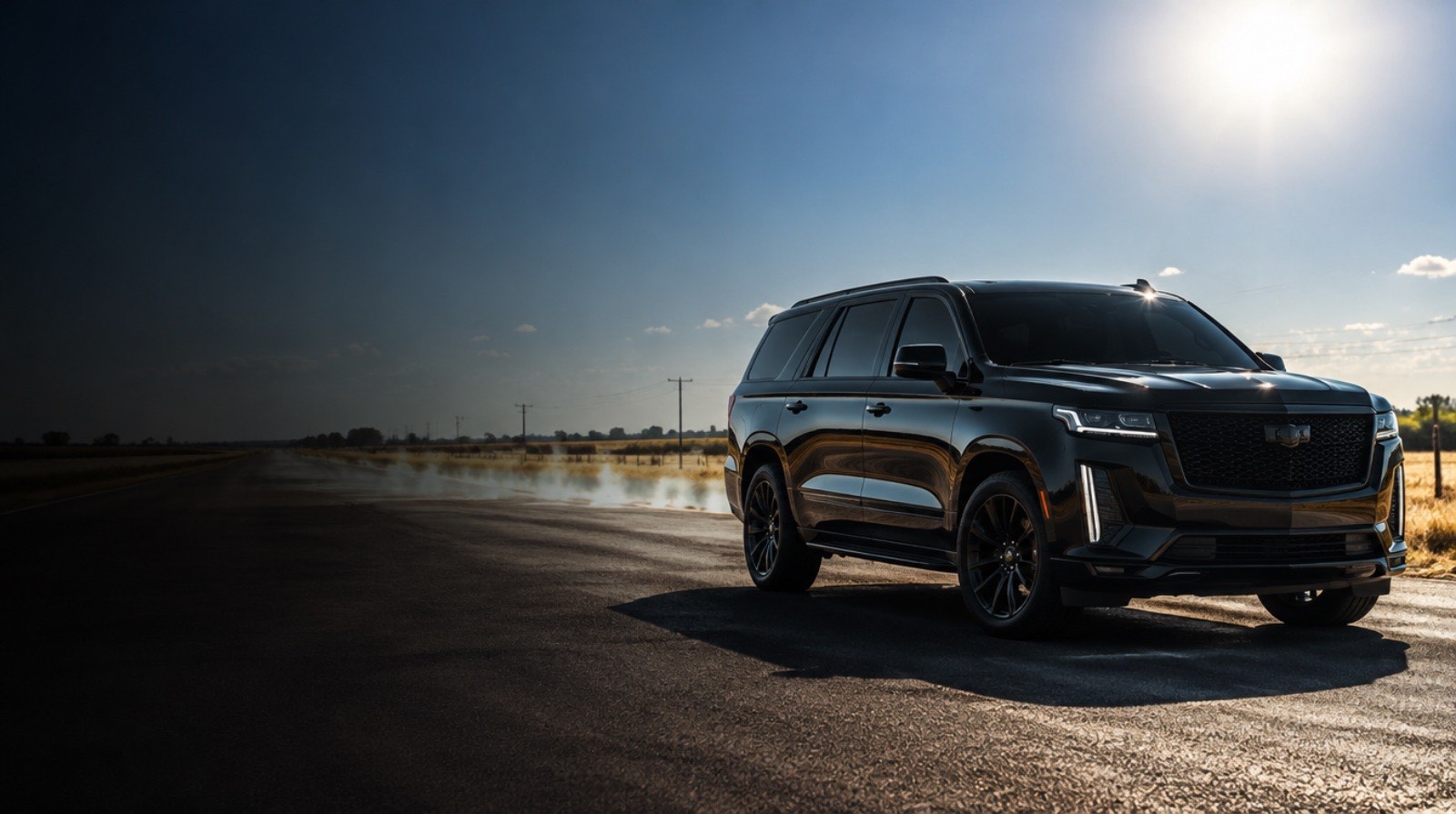
Ceramic Window Tint in Overland Park, Kansas
Nano-ceramic window film keeps your cabin cool without going limo-dark. KAVACA makes it in three tiers, from Ceramic X to the Elite Dealer exclusive Ultimate IR. Here’s how they compare. Installed in Overland Park for drivers across the Kansas City metro.
Heat rejection that doesn’t depend on darkness
Traditional window tint is dyed polyester. It darkens the glass, blocks some heat as a side effect, and fades purple within a few summers. Metallic tints reflect heat but can interfere with your phone, GPS, and keyless entry.
Ceramic tint works differently. Nano-ceramic particles in the film target infrared light, the part of sunlight you feel as heat, so a ceramic film can keep a car cooler than a dyed film two or three shades darker. There’s no dye to fade and no metal to block signals.
Every KAVACA ceramic film rejects 99% of UV, is backed by a lifetime manufacturer warranty, and comes in the shades you need to stay legal in Kansas and Missouri. What changes from tier to tier is how much infrared heat it rejects.
96°F outside.
74°F in the cabin.
On a Kansas summer afternoon, untreated glass lets up to 60% of solar heat through — turning your cabin into a furnace and forcing your A/C to work overtime.
Nano-ceramic particles selectively block infrared wavelengths from 780 nm to 2,500 nm. Your cabin stays cool, your dash, leather, and electronics stay safer, and your fuel/EV range improves.
at 2pm, full sun
same conditions
Three ceramic films, side by side
KAVACA Ceramic X
Up to 88% IR REJECTION
The step up from carbon and dyed films. True nano-ceramic IR blocking and a crystal-clear view at an entry price.
Explore Ceramic X Tint →KAVACA Ceramic IR
Up to 96% IR REJECTION
Our most popular ceramic film. A noticeably cooler cabin in every shade, without going dark.
Explore Ceramic IR Tint →KAVACA Ultimate IR
Up to 99% IR REJECTION
The flagship, with the highest infrared rejection KAVACA makes. Available only through Ceramic Pro Elite Dealers.
Explore Ultimate IR Tint →All three share the same lifetime warranty, 99% UV rejection, and zero signal interference. On a budget? KAVACA Carbon X rejects up to 80% of infrared heat. Still deciding? Read carbon vs. ceramic tint.
Backed for as
long as you own it.
Every KAVACA ceramic install at Detail Auto is registered against a manufacturer-backed lifetime warranty that protects against bubbling, peeling, cracking, delamination, and color shift — for the life of the vehicle.
- No bubbling, peeling, cracking, or delamination
- No purple-fade or color shift — ever
- Transferable to the next owner
- Documented on your vehicle's Carfax record
 Every install is reported to Carfax
Appearance Protection Services.
Why pay more
for ceramic?
A traditional dyed window tint will save you a few dollars today and cost you in heat, fade, and bubbling within a few summers. Here's what changes when you go nano-ceramic.
Dyed Tint
- ~30% IR rejection
- Fades purple in 2–4 yrs
- Bubbles & delaminates
- Limited warranty
- Can interfere with signal
Nano-Ceramic
- Up to 88–99% IR rejection
- Color-stable for life
- Will not bubble or peel
- Lifetime warranty
- Zero signal interference
01How is ceramic tint different from regular window tint?
Traditional tint is dyed polyester — it absorbs light using a pigment, which fades over time and only blocks heat as a side effect of being darker. Metalized tints reflect heat but can interfere with cell, GPS, and radio signals.
KAVACA ceramic films use nano-ceramic particles suspended in the film. Those particles specifically target infrared wavelengths — the part of the sun that produces heat — without relying on darkness or metal. You get dramatically more heat rejection at any given shade, no fading, and zero signal interference.
02What shades are legal in Kansas and Missouri?
Kansas requires at least 35% visible light transmission on all side and rear windows, and that applies to SUVs, trucks and vans as well as cars. Missouri requires 35% on the front side windows and allows darker film behind the driver. Windshield tint is limited to the area above the AS-1 line.
We're fully versed in the legal limits on both sides of the state line and will recommend the right combination of shades for your vehicle. Medical exemptions can apply — bring your paperwork.
03How long does it take to install?
A typical sedan takes about 2–3 hours, and a full SUV with a rear hatch about 3–4 hours. We keep turnaround quick and careful, and we offer a comfortable lounge with Wi-Fi if you'd like to wait. Curing is virtually complete by the time you drive off — full cure happens over the next several days, during which we ask you not to roll your windows down.
04Will ceramic tint turn purple or bubble like older tints?
No. Purple-fade and bubbling are caused by dye breakdown and adhesive failure — both of which are properties of cheaper dyed films. KAVACA ceramic films contain no dyes at all, and uses a manufacturer-grade adhesive that's tested over the lifetime of the vehicle. Your lifetime warranty covers both, just in case.
05Can ceramic tint be combined with windshield protection or PPF?
Absolutely — and it's one of our favorite stack-ups. Many of our clients add a clear Ceramic Pro windshield protection film for full-vehicle UV and IR coverage, and pair it with Ceramic Pro Paint Protection Film and a Ceramic Pro nano-ceramic coating on the body. Mention it when you book and we'll bundle a quote.
06How much does Ceramic Tint cost?
Pricing depends on the vehicle, the shades you choose, and how many windows you include. As a guideline, a typical full-vehicle KAVACA ceramic install starts in the mid-hundreds and scales with vehicle size and complexity. The lifetime warranty is included — there are no add-on warranty packages.
The fastest way to get an accurate number is to send us your year/make/model and we'll get you a quote quickly.
Not sure how dark you can go? See the Kansas & Missouri window tint law guide.